
Red king crab
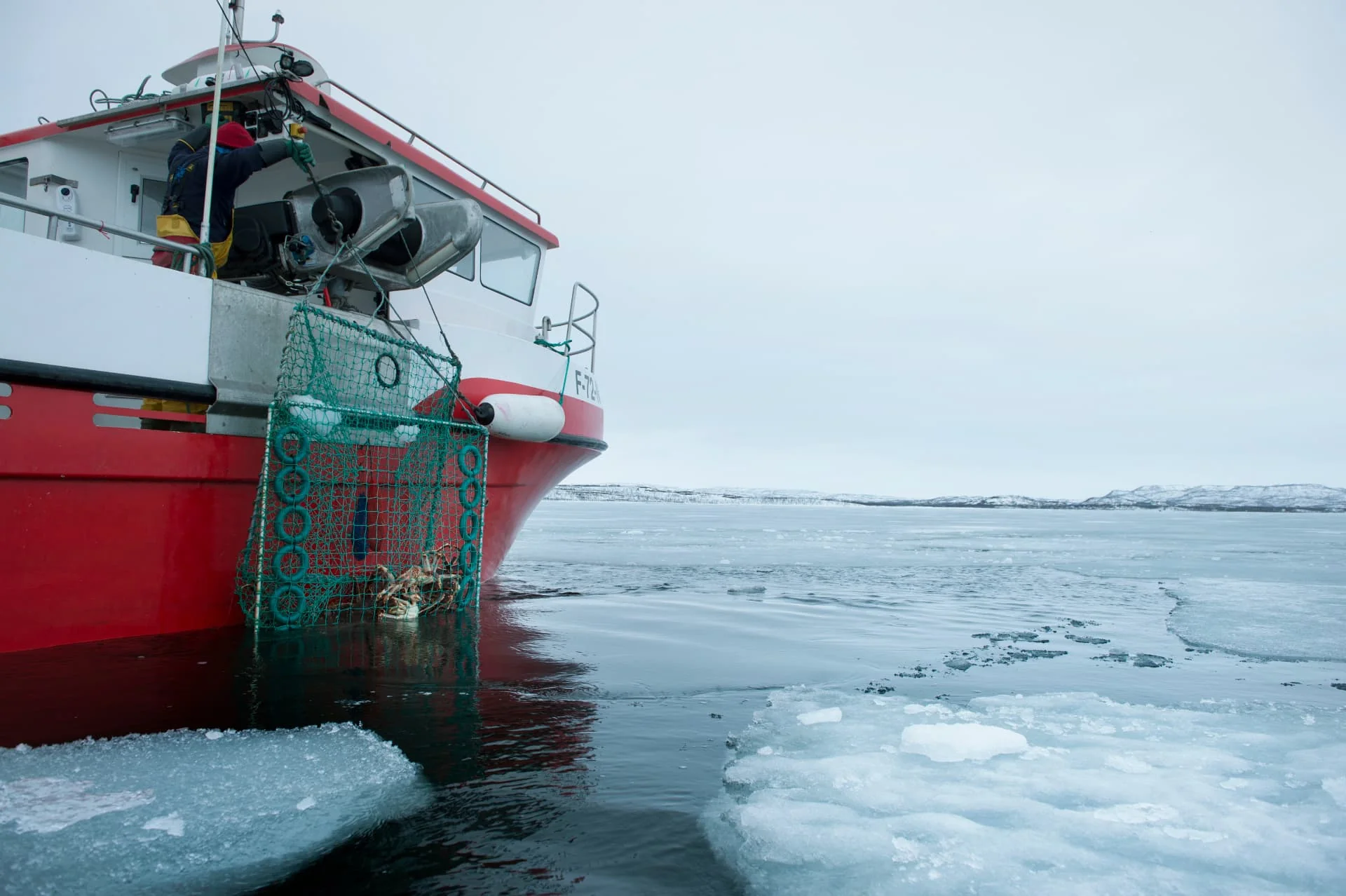
Harvested with pots off East Finnmark. Carefully handled from catch to finished product.
A quota-regulated pot fishery.
A limited seasonal product.
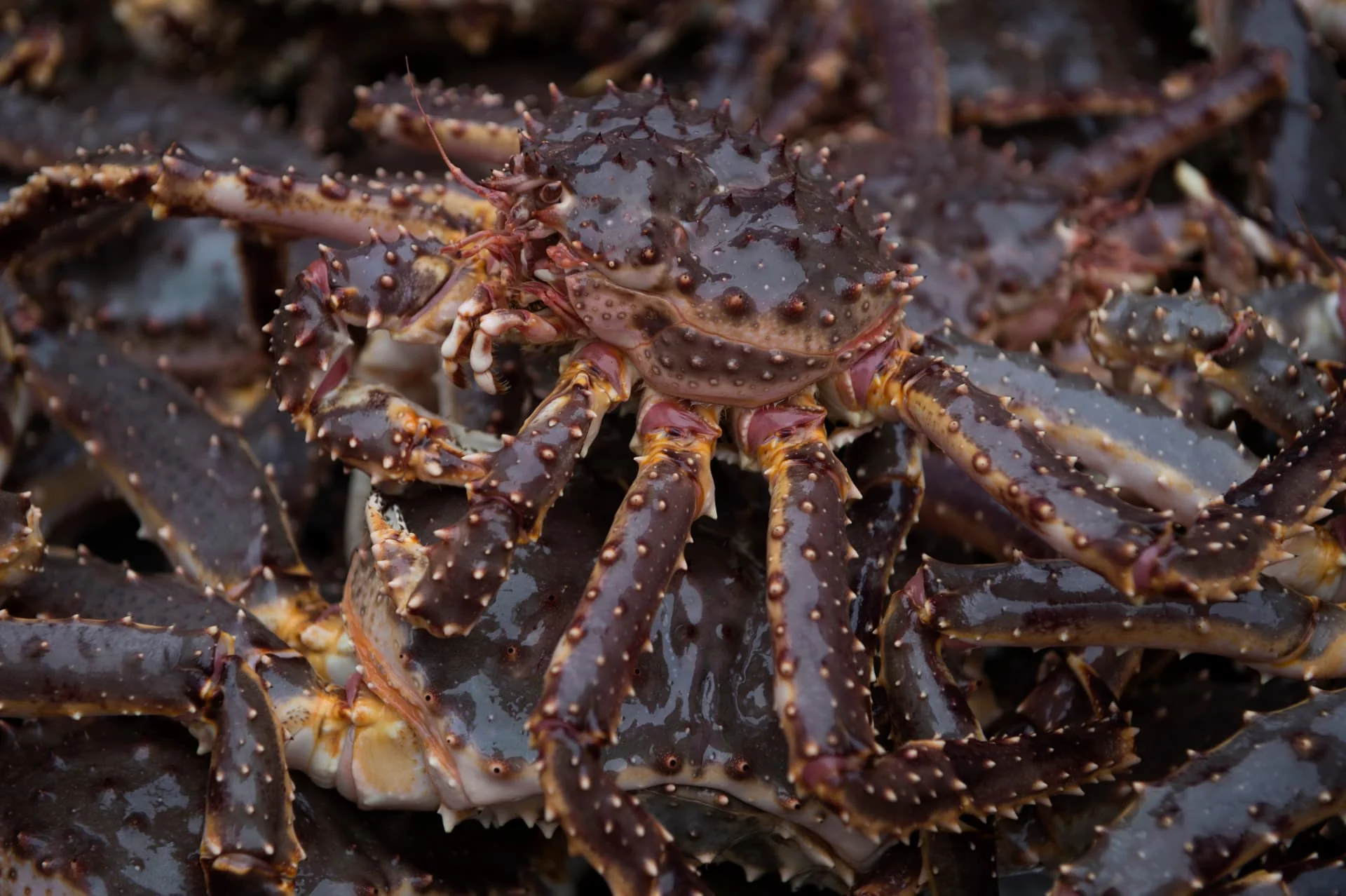
Red king crab (Paralithodes camtschaticus) is not native to the Barents Sea. It was introduced to Russian waters in the 1960s and has since spread along the Norwegian coast, where it is now harvested mainly off East Finnmark, towards Nordkapp.
The commercial fishery is quota-regulated east of 26°E, roughly at Nordkapp. West of this boundary, a separate management regime aims to limit further spread. Quotas, fishing periods and retention rules are set by the Norwegian Directorate of Fisheries; current rules and product availability must be checked for the order period.
Normar sources red king crab directly from Norwegian suppliers approved by Mattilsynet (the Norwegian Food Safety Authority), to your specification, coordinates export documentation and arranges direct delivery. Fishermen catch the crab; producers handle, prepare and pack it.
From pot to packed crab
The production process
Fishing & live handling
Caught in pots. Kept alive.
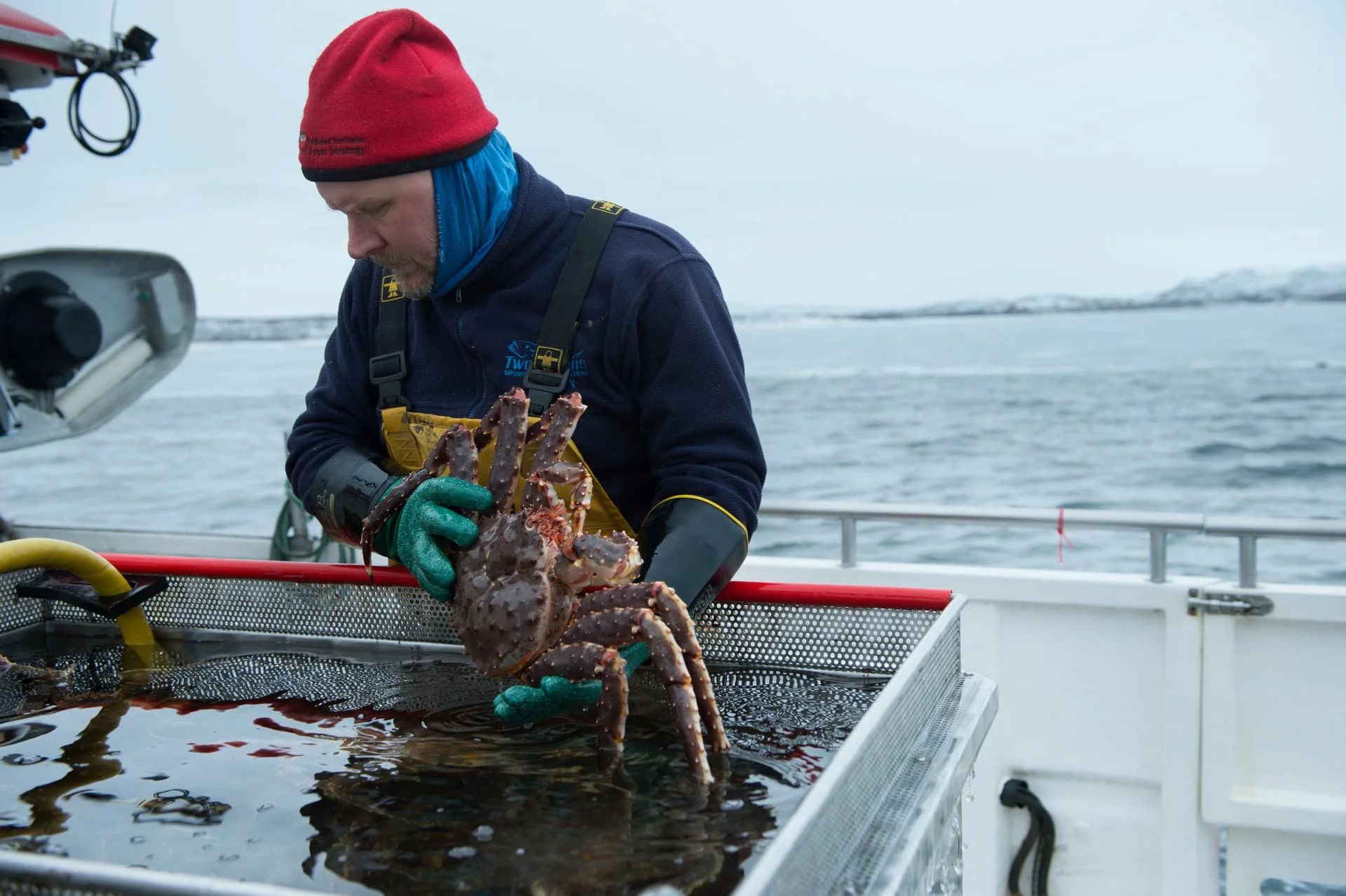
Baited pots are set on the seabed and hauled to bring the catch aboard. Fishermen measure and sort the crab against the applicable retention rules before bringing the retained catch ashore.
Retained crab is held alive in suitable seawater conditions. The fisherman or receiving producer controls holding time, water quality and handling to maintain the crab’s condition before selection and dispatch.
Landing & selection
Sorted, counted and assessed.
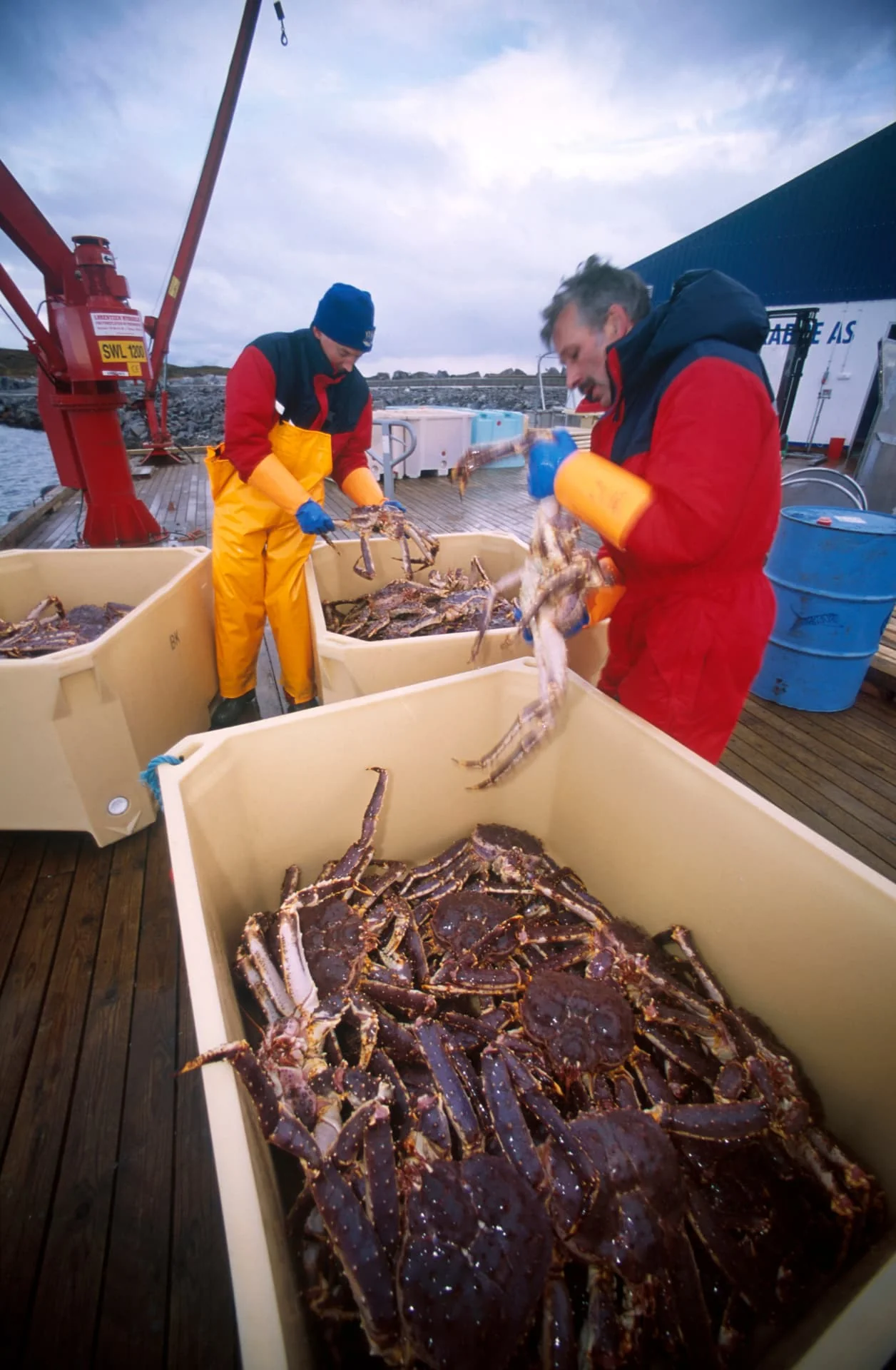
The catch is landed directly from the vessel to a reception facility approved by the Norwegian Food Safety Authority. There the crab is sorted by size and condition, and weak or damaged animals are separated from crab suited for further handling.
Crab intended for live supply follows a different route from crab destined for cooking. Live crab is packed and transported so that it stays cool and moist, with handling and temperature controlled until it reaches the buyer.
Cooking, cooling & packing
Heat, cold and an unbroken chain.
Much of the Norwegian king crab trade is live crab; the rest is cooked and frozen. For cooked products the producer prepares the crab before controlled heat treatment, then cools it promptly and packs it in the agreed format — whole crab, legs or claws.
From landing onwards the product stays under temperature control. Batch identification supports traceability to the fishing vessel and the producer, and format, packing and availability are confirmed before quotation.
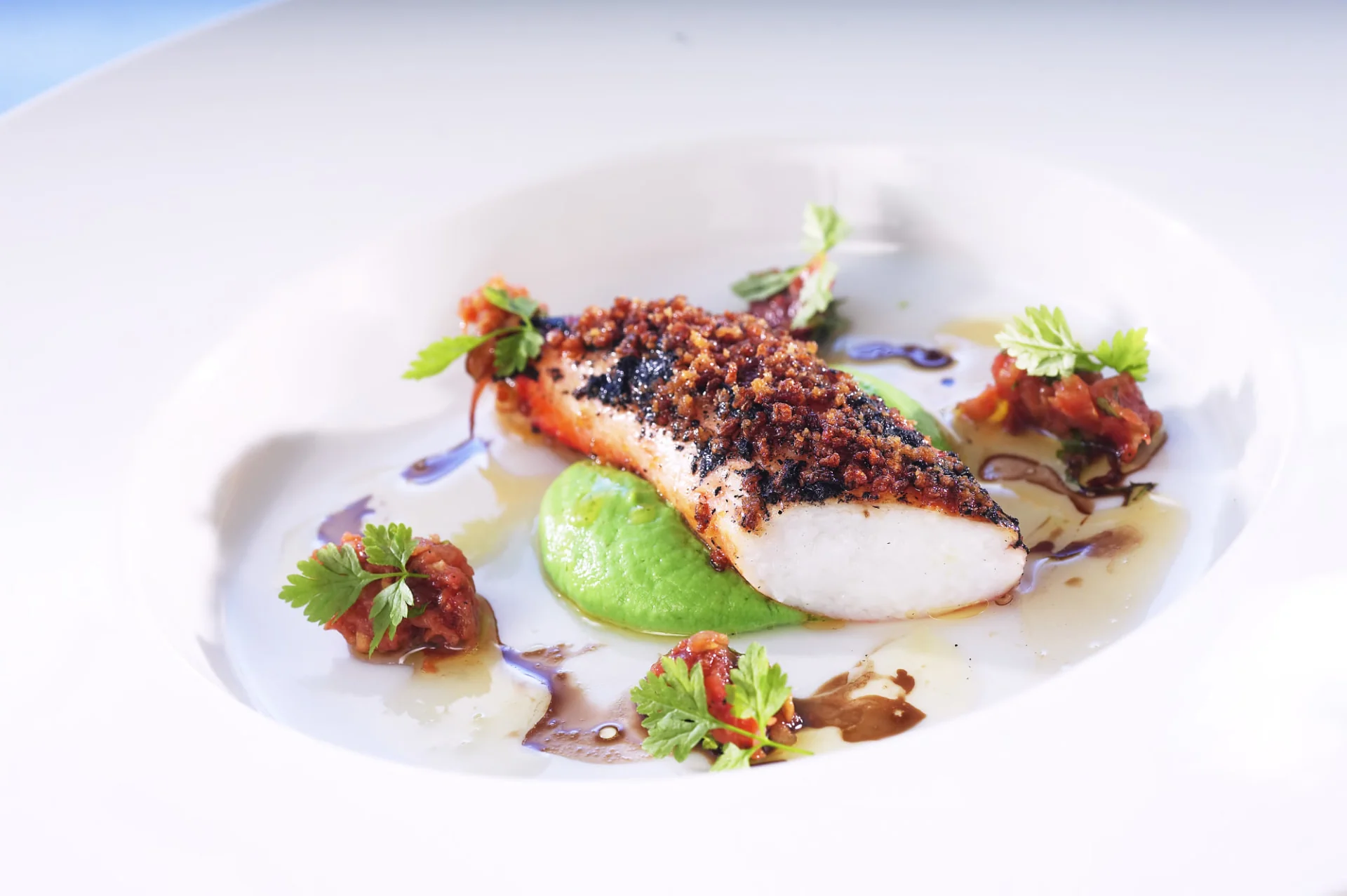
The finished product
What lies behind
the quality?
Condition at capture and live-holding routines influence meat yield. Producers assess shell condition, activity and damage before selecting crab for live supply or processing.
Keeping live crab in cold, full-strength seawater, sorting out weak animals, prompt cooking and rapid cooling, and an unbroken chilled or frozen chain help preserve the sweet flavour and firm texture king crab is known for.
King crab is supplied live, whole cooked, or as legs and claws. Brown meat carries specific dietary advice: the Norwegian Food Safety Authority advises children, pregnant and breastfeeding women, and women of childbearing age not to eat it, while white claw and leg meat is not covered by that advice.
Discuss your requirements.
For Norwegian red king crab, send us the live, cooked or frozen format, size, volume and destination you need. Availability is confirmed for the order period. Pallet deliveries are available. We provide product specifications and the documents you need in direct dialogue. ASC, GlobalG.A.P. or MSC certification may apply, depending on the supplier and product; we confirm this for your enquiry. For picked crab meat and dressed crab, see our brown-crab catalogue formats.
Contact our team