Two products.
One salting tradition.
Saltfish is fish preserved through salting and maturation, without the subsequent drying stage. Clipfish — known in Norway as klippfisk — takes the process a step further: the salted fish is also dried.
Cod is a familiar raw material, while saithe, ling and tusk are also used for clipfish. Unlike clipfish, stockfish is air-dried without added salt. Each method gives the fish its own texture and character.
Normar Seafood sources directly from approved Norwegian suppliers. The preparation, salting, drying and packing are carried out by the producers — not by Normar. Documentation available on request.
From raw fish to finished product
The production process
Preparation & salting
Split, washed and salt-cured.
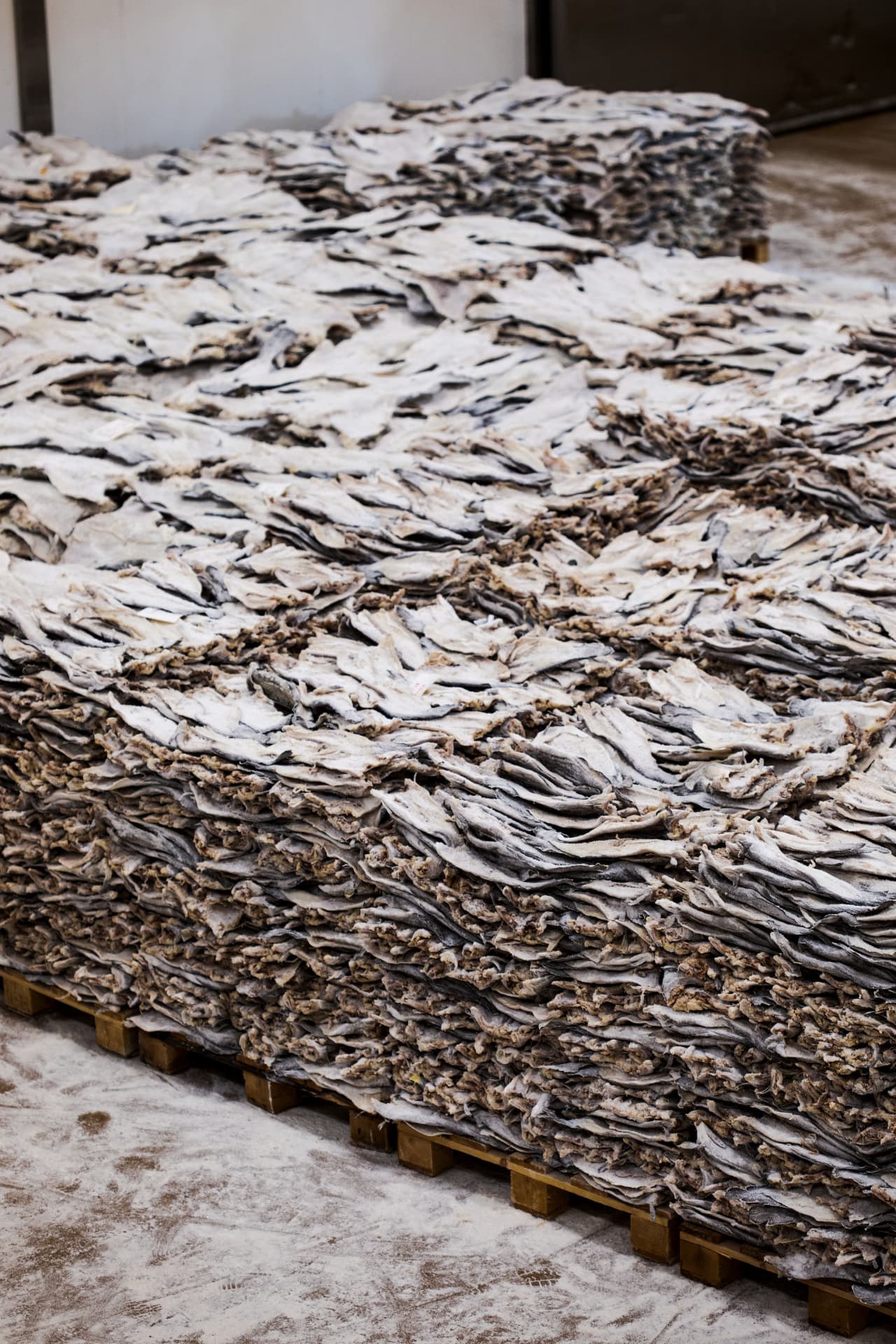
The fish is bled, gutted and headed, then split open so it lies flat. Much of the backbone is removed, and the fish is washed before salting.
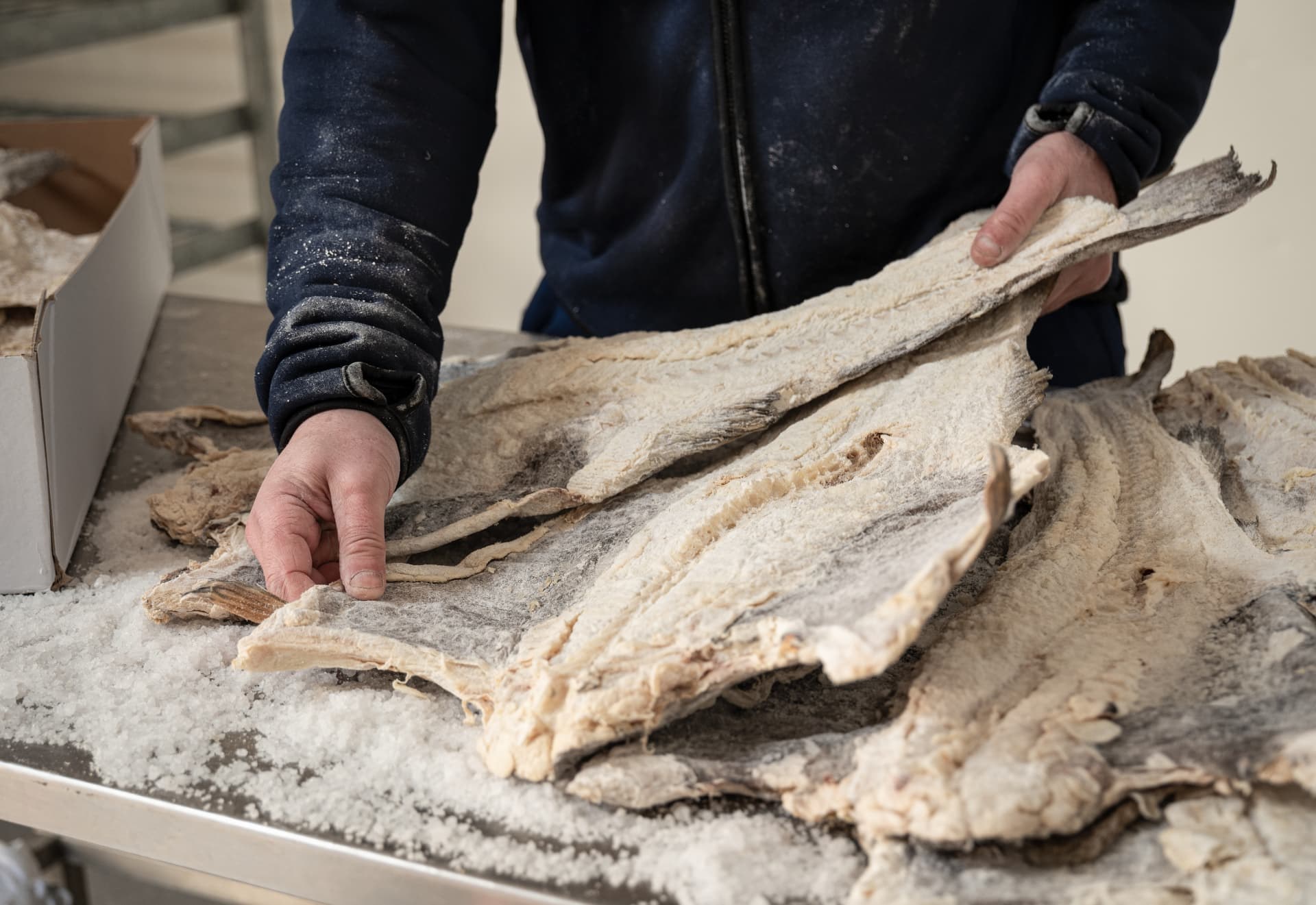
At the producer, salt draws moisture from the flesh as the fish matures. Methods can combine brining and dry salting, followed by stacking with salt. Time and temperature are managed according to the raw material and the required specification.
The result is fully salted fish. It can be supplied as saltfish, or continue to drying to become clipfish.
Drying
From saltfish to clipfish.
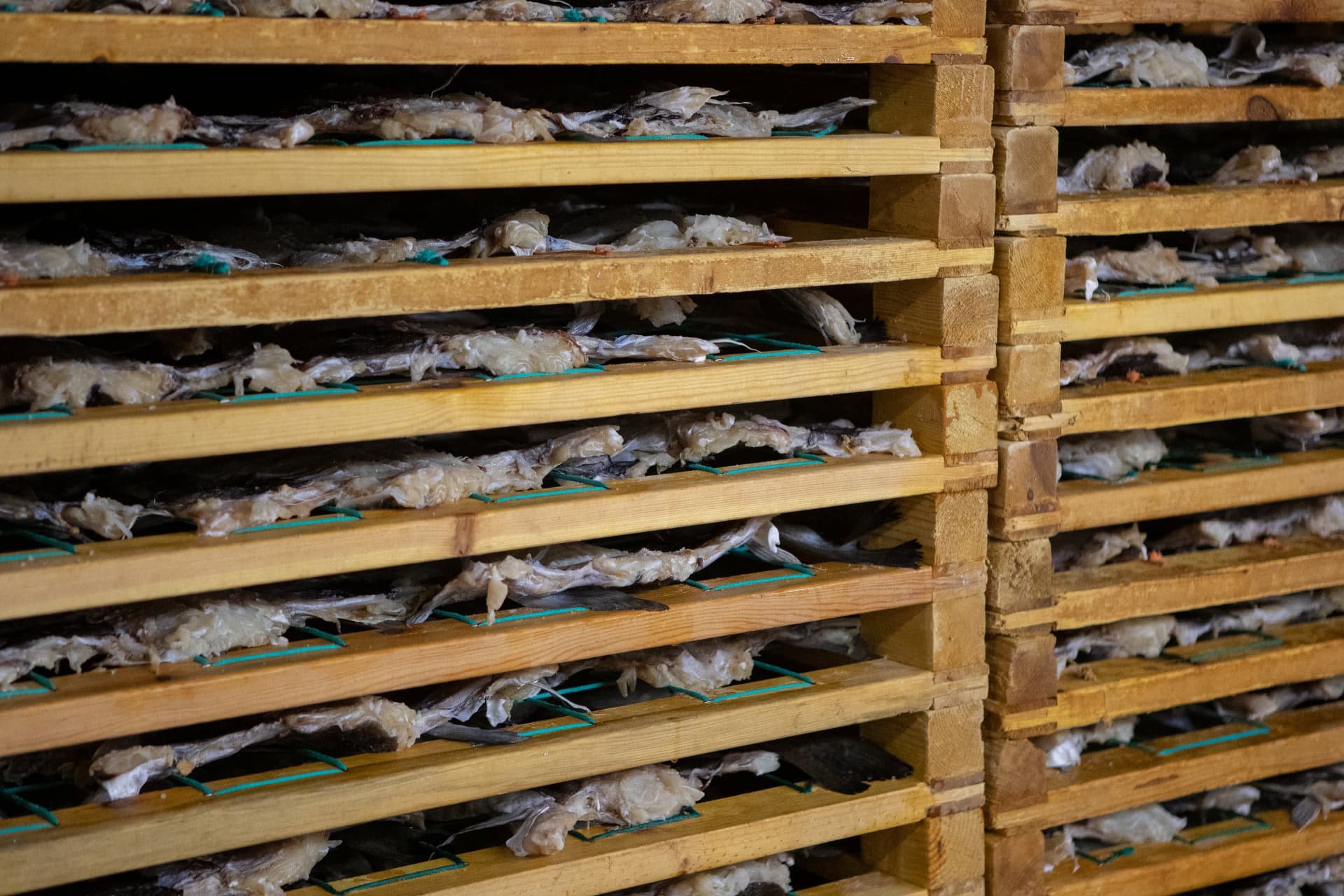
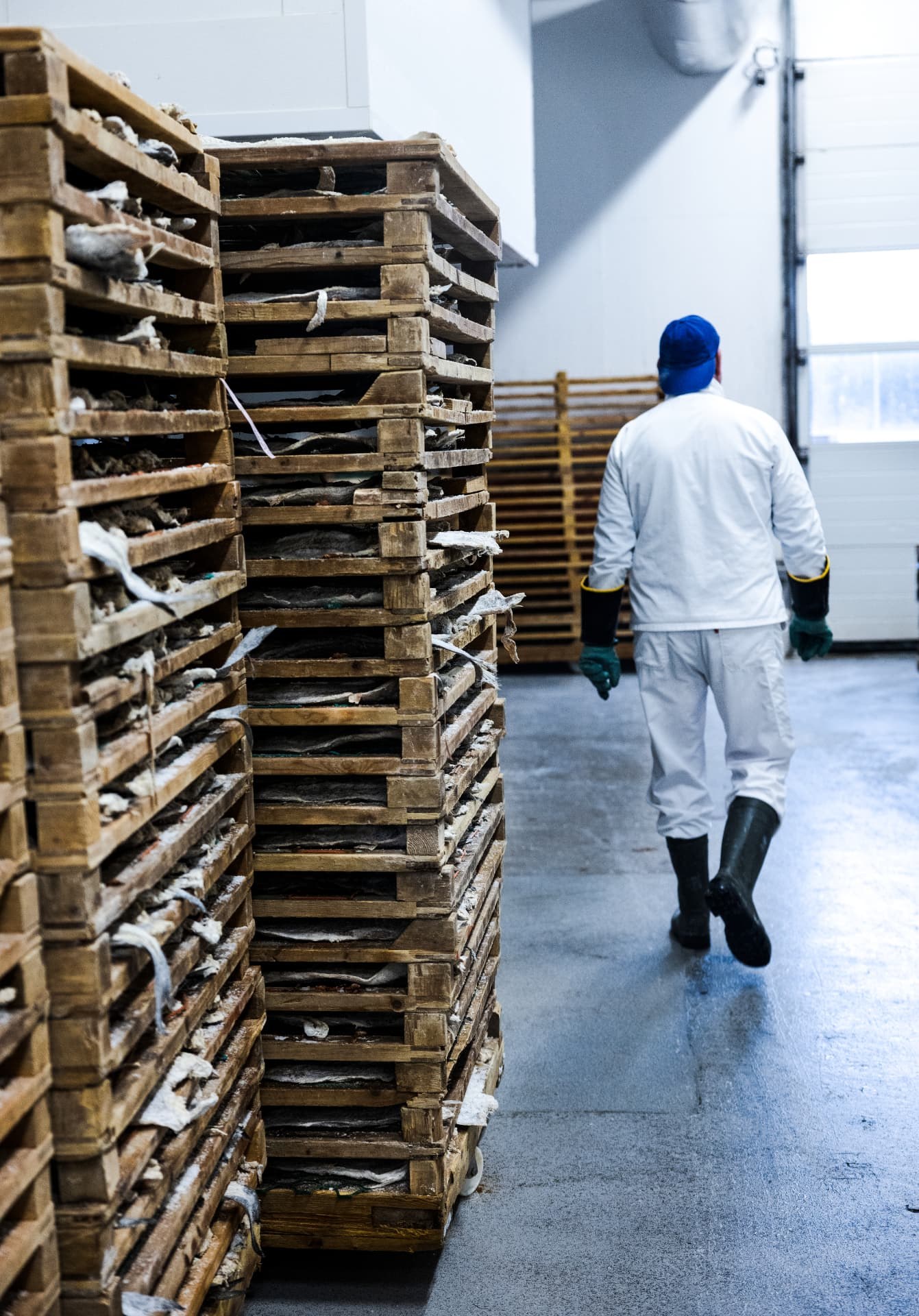
For clipfish, excess surface salt is removed before the fish is laid on drying trays. Modern Norwegian producers use indoor drying facilities, where airflow, temperature and humidity can be controlled.
Drying removes more water and develops the firm texture associated with clipfish. The drying programme depends on the size of the fish and the finished product specification, rather than a single fixed drying time.
Grading & packing
Checked against the specification.
The producer sorts the fish by species, size and quality, assessing characteristics such as colour, appearance and dryness. The finished fish is then packed for the agreed market and format.
Normar coordinates the enquiry, specification and delivery directly from the Norwegian producer. Species, grade, salt content, drying level, packing and availability are confirmed before quotation.
A Norwegian tradition since the 1690s
More than 300 years
of clipfish.
Salting and drying fish are much older preservation methods, but Norway's commercial clipfish tradition dates back to the late 17th century. In 1691, merchant Jappe Ippes received a royal privilege to produce and export clipfish in Nordmøre.
The fish was originally spread on coastal rocks to dry in the sun and wind — the practice behind the Norwegian name klippfisk. Kristiansund became an important centre of the trade, with Ålesund and Sunnmøre later developing a strong clipfish industry.
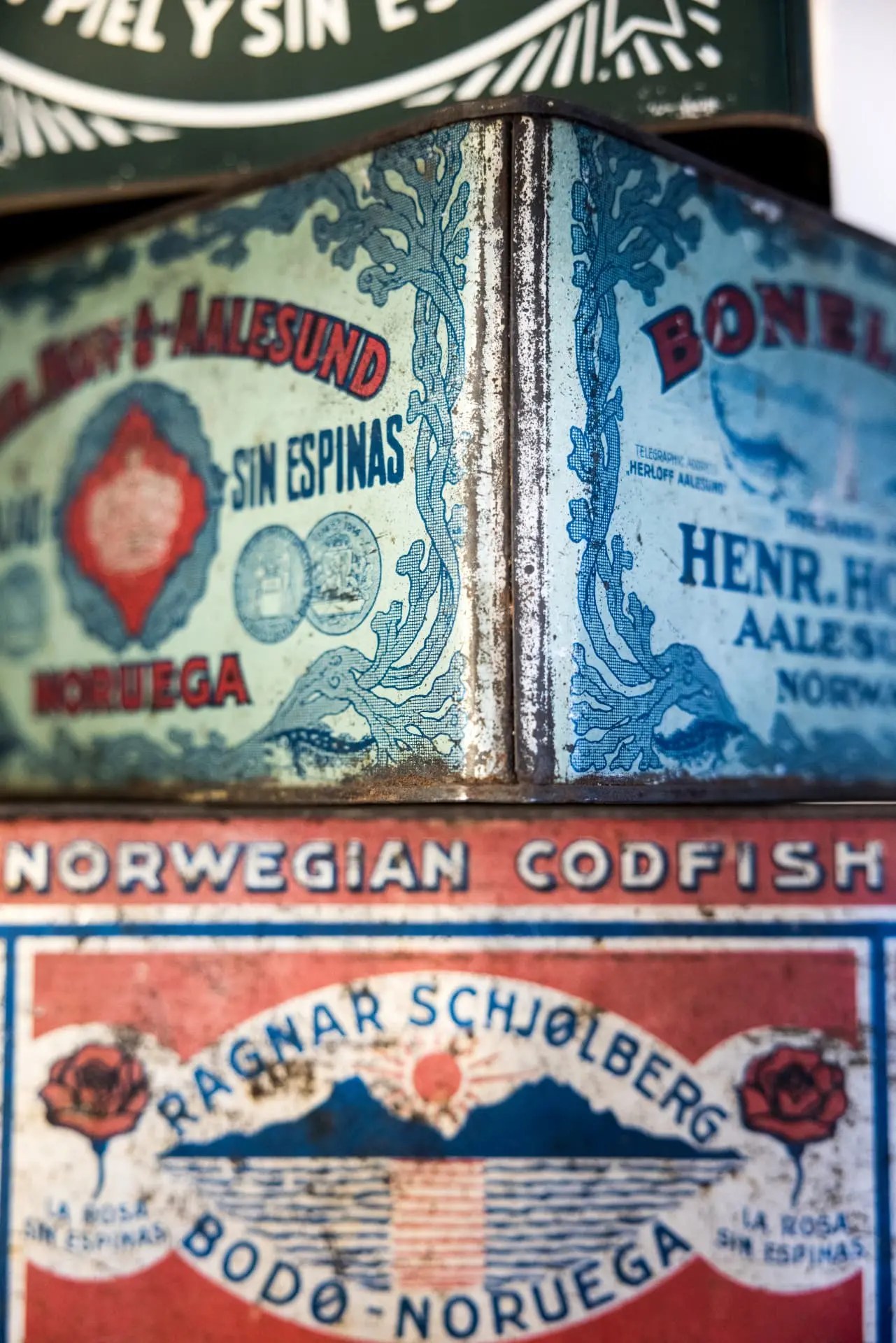
Today, controlled indoor drying has largely replaced the rocks, but the principle remains: preserve the fish with salt, then reduce its moisture through drying. The old export labels reflect the long relationship between Norway's coast and food traditions abroad.
Discuss your requirements.
For salted fish or clipfish, send us the species, size, format, volume and destination you need. Product catalogue and documentation available on request.
Contact our team