From freshwater
to the Norwegian coast.
Atlantic salmon (Salmo salar) begins life in freshwater. At the hatchery, fertilised eggs develop into fry, which are fed and raised under managed conditions. As the young fish develop into smolt, they become adapted to life in seawater.
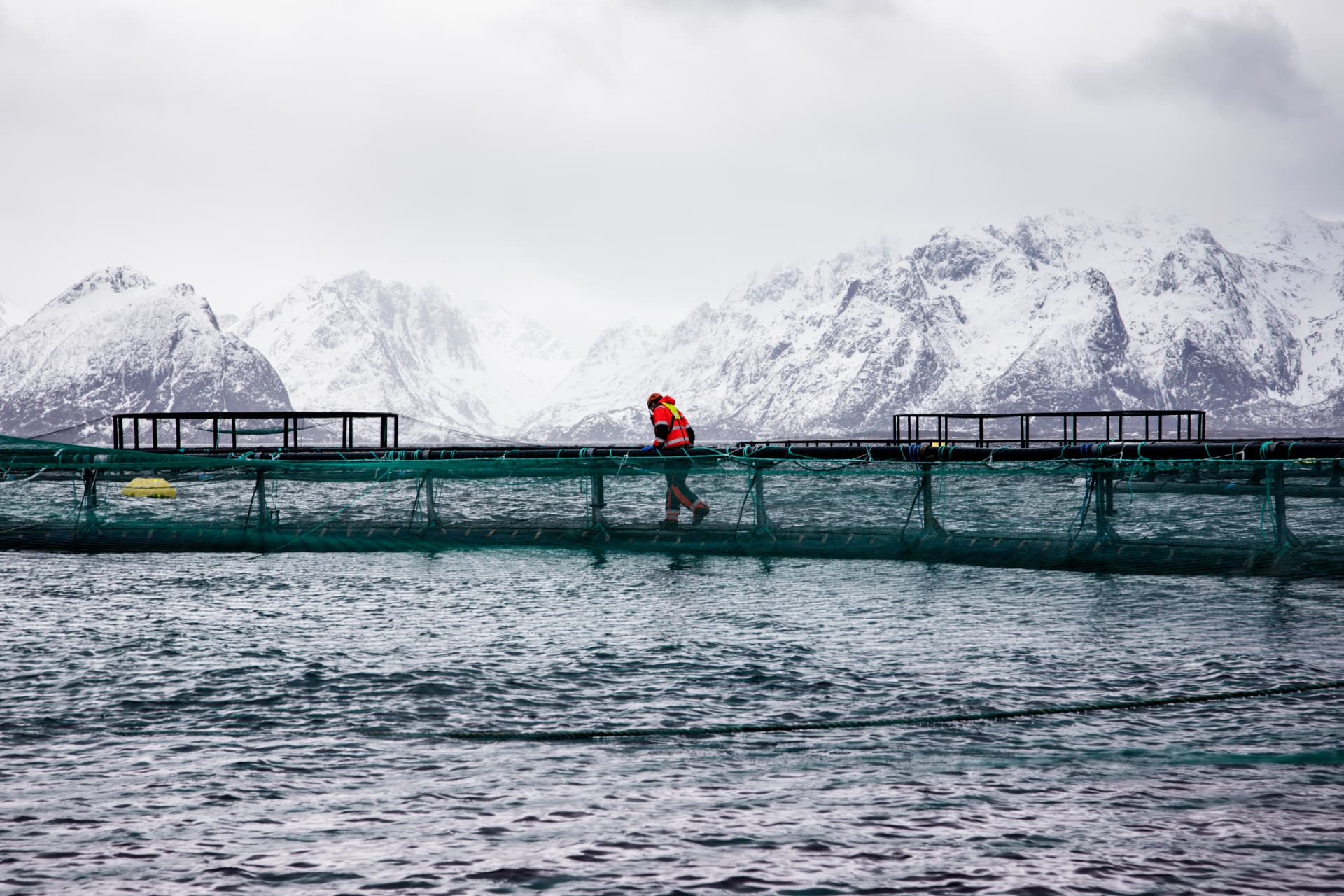
After transfer to sea pens, the salmon continue growing in Norwegian coastal waters. Feeding, water conditions and fish health are followed throughout the seawater phase, with routines adapted to the fish and the conditions at each farm.
Normar Seafood sources whole salmon directly from approved Norwegian suppliers. Farming, harvesting and packing are carried out by the producers — not by Normar. Documentation available on request.
Growing salmon at sea
The production process
Cold seawater & growth
Life in cold, flowing water.
Norway's coastal waters provide the cold seawater environment in which Atlantic salmon grow. Water moves through the nets, bringing oxygen to the fish. Temperature, currents and oxygen availability vary with the season and location, so conditions must be assessed at each site.
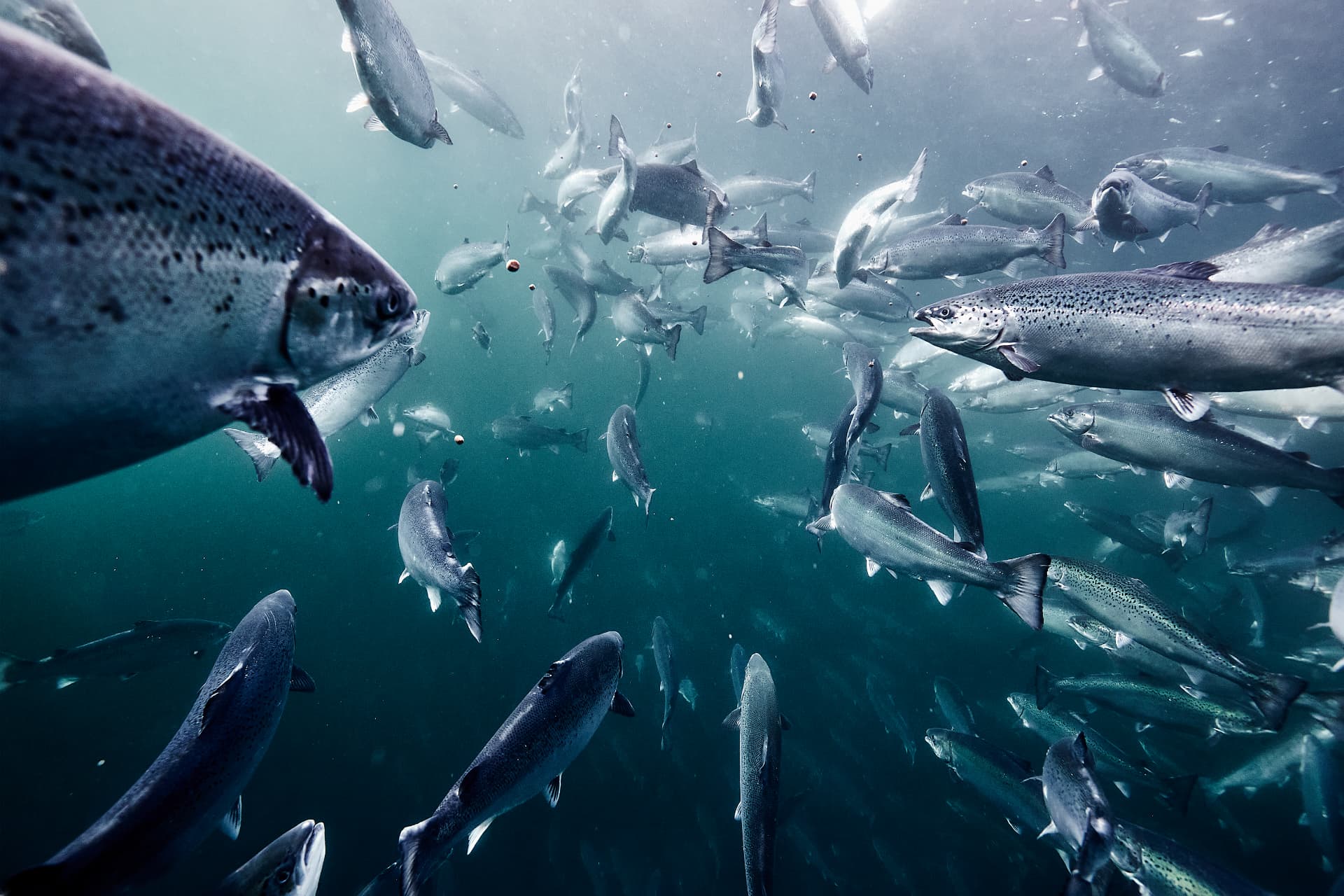
The salmon receive formulated feed that supplies protein, fats, vitamins and minerals. Feeding is adjusted to appetite, fish size and water conditions. Observing how the fish respond helps the producer manage growth and limit uneaten feed.
Cold water alone does not guarantee fish welfare. Suitable water conditions, appropriate stocking levels, nutrition and health follow-up all form part of responsible farming.
Monitoring & care
Watching the fish.
Checking the pens.
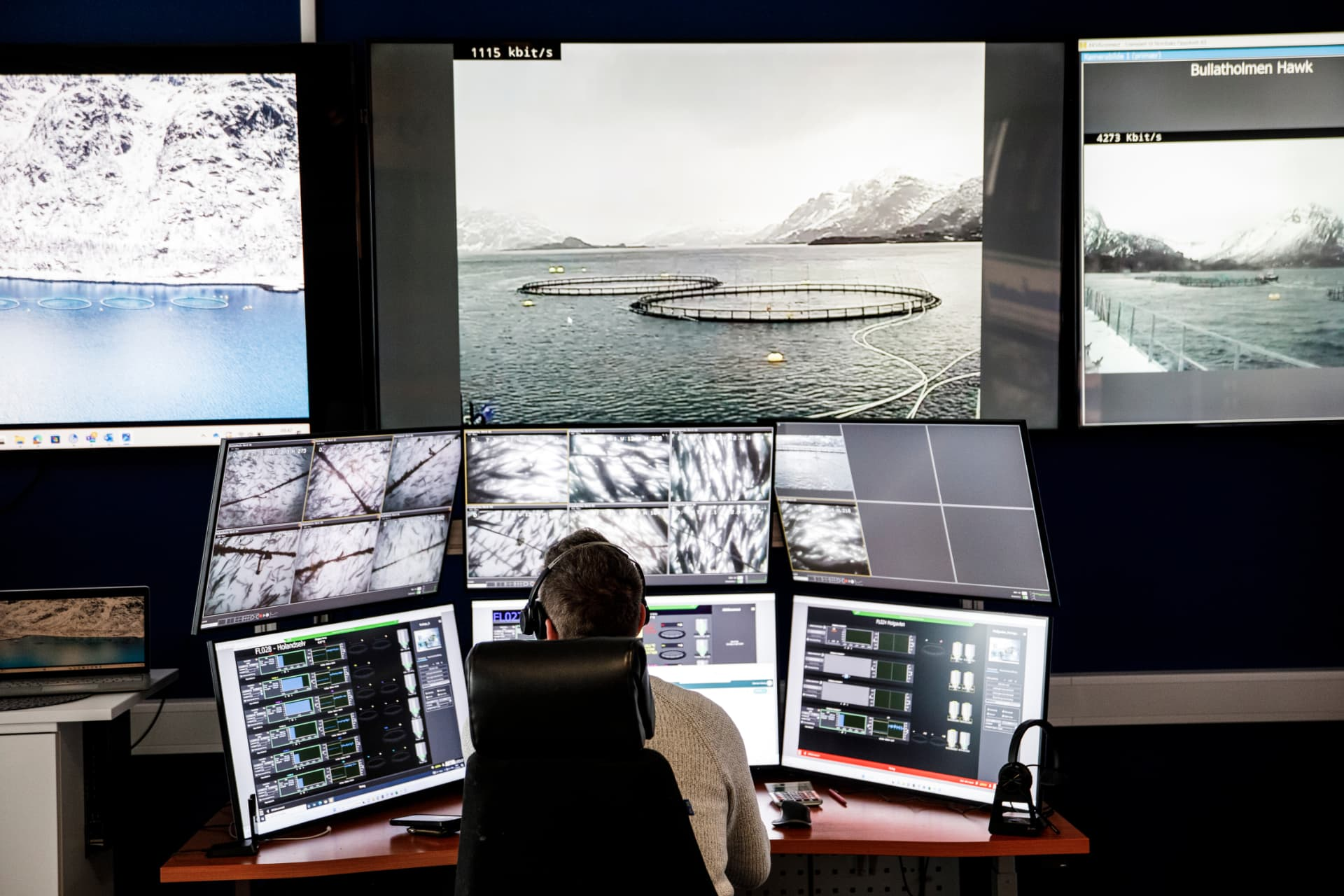
Camera systems can give farm staff a view of the salmon beneath the surface, helping them observe feeding, swimming behaviour and changes in appetite. Water measurements, including temperature and oxygen, provide additional information for daily decisions.
Technology supports, rather than replaces, hands-on inspection. The producer checks nets, moorings and other pen equipment, and follows fish health, mortality and sea-lice levels. Fish-health professionals carry out health follow-up and advise on measures when needed.
Monitoring methods and equipment vary between farms. Together, observations, inspections and records help the producer follow the fish throughout production and respond when conditions change.
Harvesting
Harvested with care.
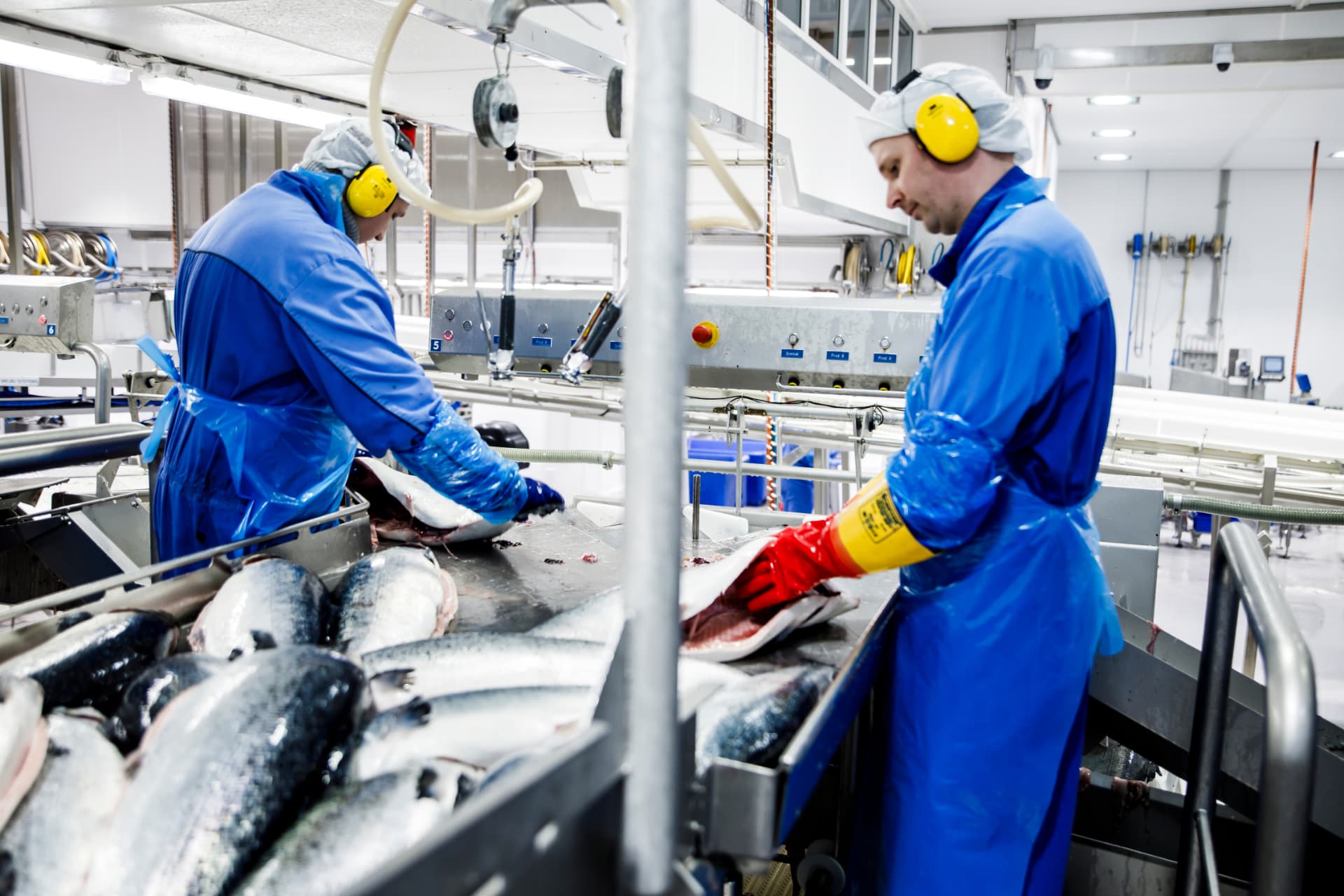
When the salmon reach harvest size, they are transported to the producer's harvesting plant. Norwegian regulations require the fish to be stunned before slaughter, and the process is designed to limit stress, as calm handling also supports flesh quality.
The fish are bled, gutted and washed, then chilled quickly. Each fish is inspected and graded by size and quality before it moves on to packing.
Packing
Packed on ice.
Kept cold.
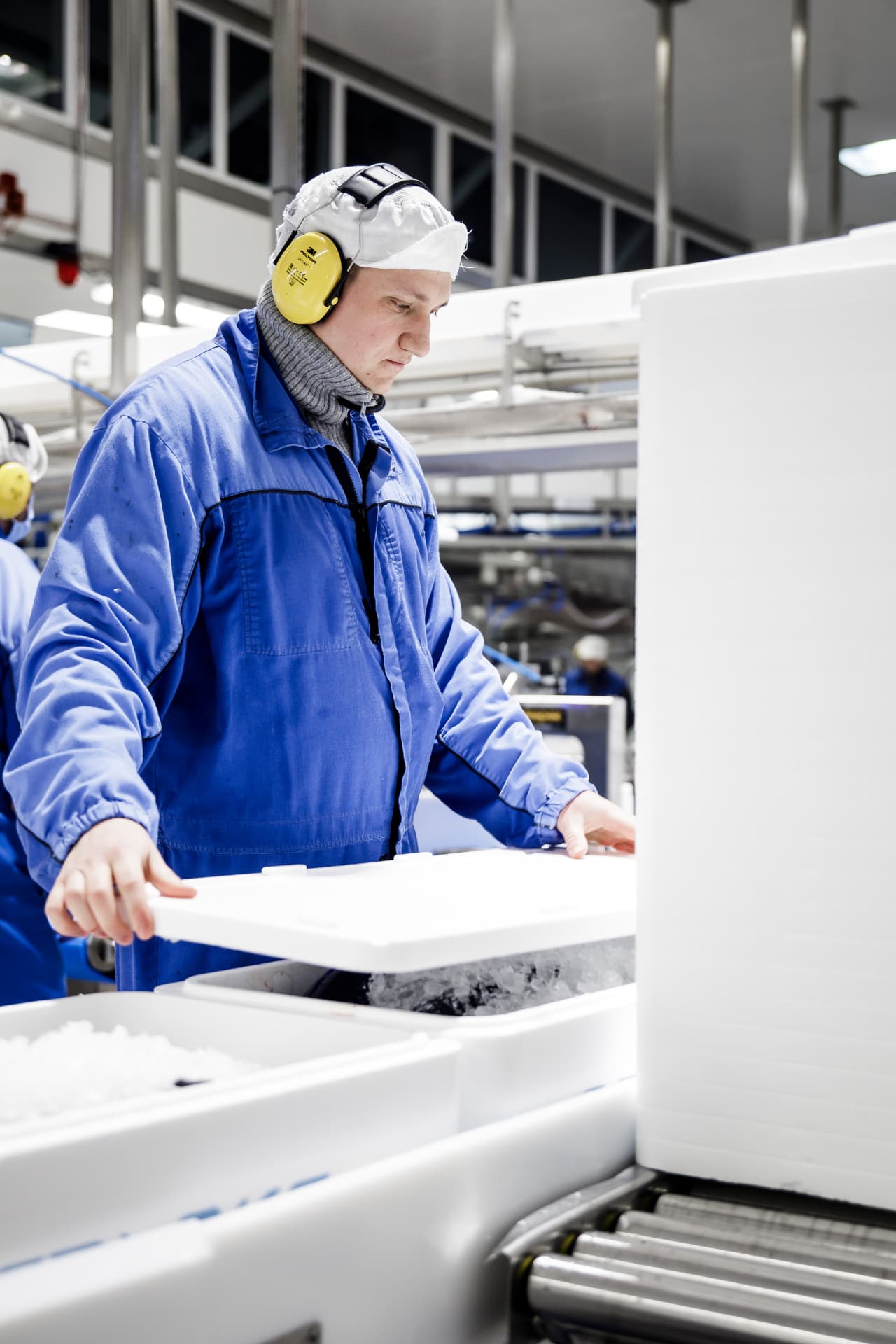
The producer packs the whole salmon in insulated boxes with ice, sorted by weight class such as 5–6 kg and 6–7 kg. Boxes are labelled for traceability.
An unbroken cold chain from the plant to the buyer helps preserve freshness. Delivery goes directly from the approved producer to the buyer.
The result
Fresh whole
salmon.
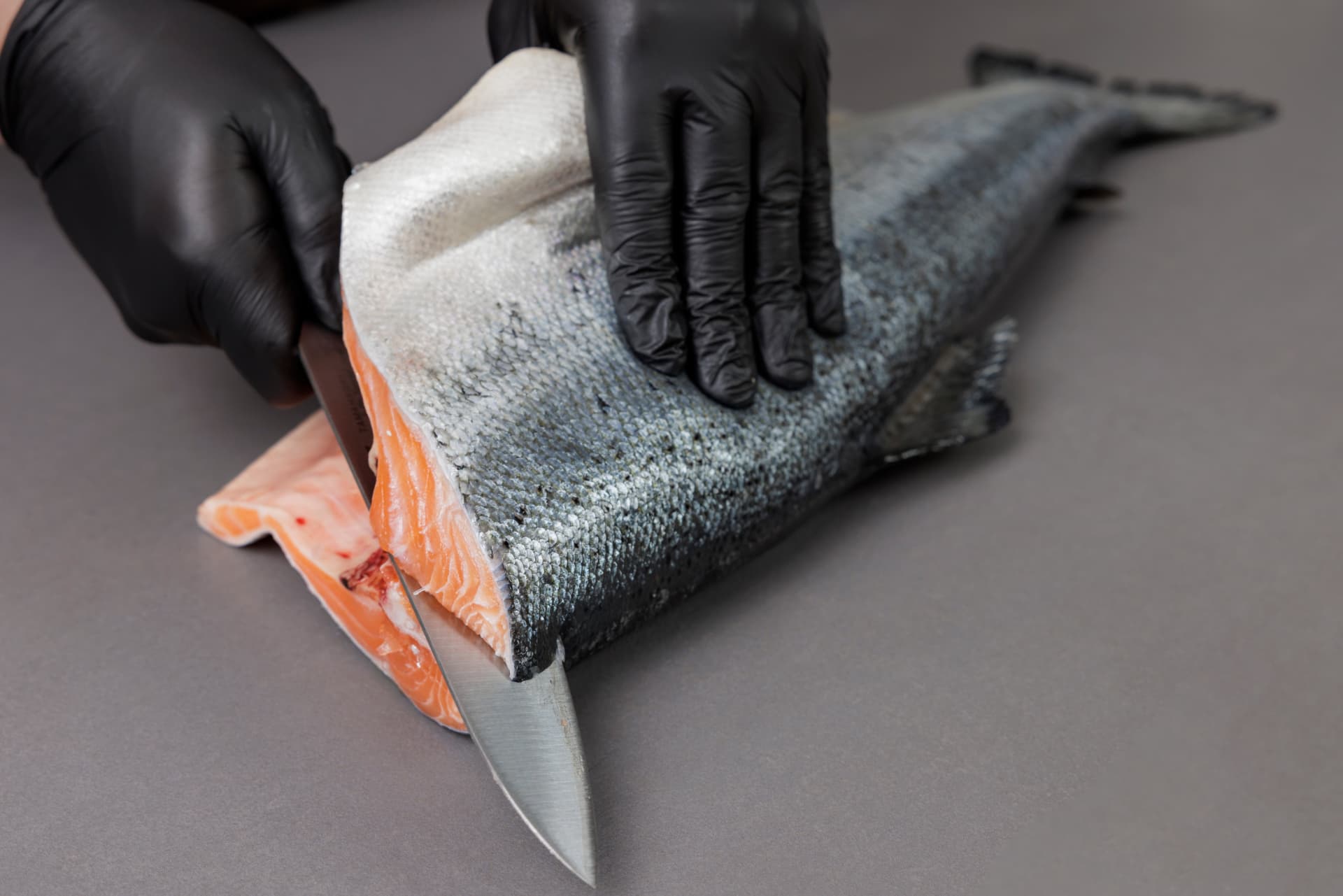
The result is fresh Norwegian Atlantic salmon with firm, orange flesh, ready for the buyer to fillet, portion or process further.
Product specifications and documentation available on request.
Discuss your requirements.
For whole Norwegian salmon, send us the size, format, volume and destination you need. Availability, packing and delivery are confirmed before quotation. Product catalogue and documentation available on request.
Contact our team